The 2026 FIFA World Cup officially began at Estadio Azteca in Mexico City with an opening ceremony built for both football fans and global entertainment audiences. Headlined by Shakira and Burna Boy, and supported by a cast of Mexican and international performers, the show did more than warm up the crowd before Mexico faced South Africa. It turned the tournament’s first night into a celebration of football history, host-nation pride and the expanded global reach of the World Cup.
For viewers searching for what happened at the World Cup 2026 opening ceremony, the key story was not just who performed. It was how the ceremony connected Mexico’s football legacy, the first 48-team World Cup, and the modern pop culture identity of the sport on one of its most iconic stages.
Why Estadio Azteca Was the Perfect Stage for the World Cup 2026 Opening Ceremony
There are few stadiums in world football with the weight of Estadio Azteca. The Mexico City venue hosted the 1970 and 1986 FIFA World Cup finals, giving it a place in football mythology that goes far beyond club football or national team hosting duties.
That history mattered on opening night. The ceremony was not staged in a neutral modern arena with no emotional baggage. It unfolded in a stadium where World Cup memories already live, making the official launch of the 2026 tournament feel symbolic from the first moment.
Before kickoff between Mexico and South Africa, the Azteca became a bridge between eras. Fans arrived to a Mariachi-style atmosphere, flags in the stands, and a sense that Mexico was not just helping host this World Cup with Canada and the United States, but also reclaiming a central place in the tournament’s story.
Shakira’s Return Added Nostalgia to a New World Cup Era
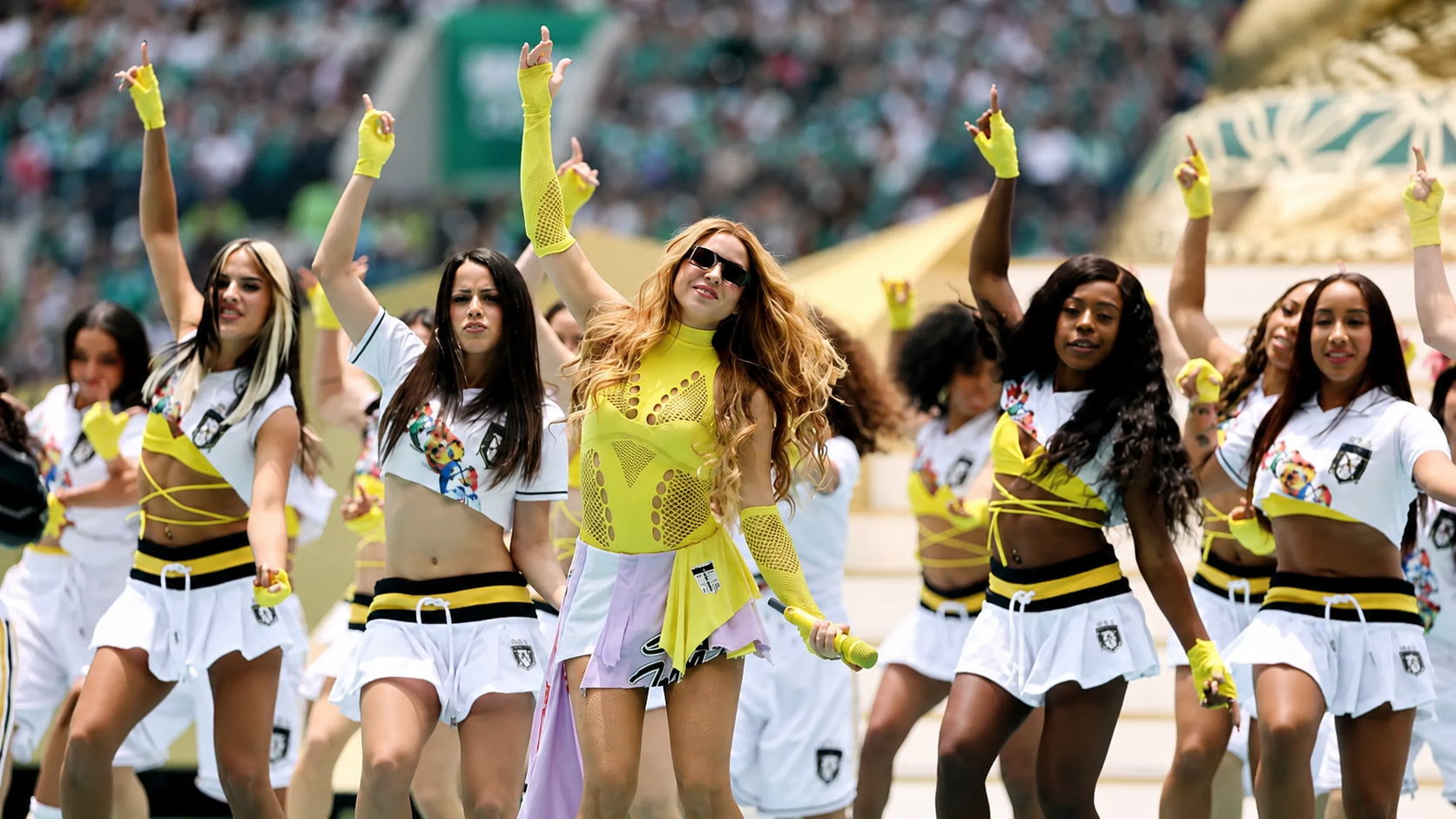
One of the biggest emotional beats of the night came with Shakira. Her relationship with the World Cup is already part of tournament folklore because of Waka Waka (This Time for Africa), the anthem that defined the 2010 edition for many fans.
That is why her return in Mexico City carried more meaning than a standard celebrity booking. Performing Dai Dai, Shakira linked the memory of past World Cups to the start of a new one, reminding audiences how music becomes part of football history just as much as goals and trophies do.
For long-time fans, it was nostalgia. For younger viewers, it was a reintroduction to one of the few pop stars whose name is genuinely tied to World Cup culture. That blend of memory and reinvention helped the ceremony feel bigger than a pre-match concert.
Burna Boy Brought the Global Energy the Tournament Wanted
Burna Boy’s role in the show underlined how broad the World Cup’s cultural map has become. With the tournament now expanded to 48 teams, FIFA clearly leaned into an opening ceremony that reflected football’s reach across continents.
His performance brought rhythm, scale and modern international star power. Paired with Shakira, Burna Boy helped frame the night as a meeting point between established World Cup nostalgia and the sound of football’s current global audience.
Mexican Identity Was at the Heart of the Ceremony
The strongest part of the World Cup 2026 opening ceremony was the way it rooted a global event in local identity. This was not a generic international show dropped into Mexico City. It was visibly shaped by Mexico’s culture, symbols and artistic traditions.
Aztec-inspired visuals gave the production a historical backbone, while colourful costumes and traditional Mexican dress added movement and texture across the field. The visual language made it clear that Mexico was not just a venue on the schedule. It was a storyteller.
Spanish and English welcomes reinforced that message. The bilingual presentation reflected Mexico’s role as a host nation while also speaking to the cross-border reality of a World Cup shared with Canada and the United States.
Musically, the atmosphere felt unmistakably Mexican even as the lineup stretched across genres and countries. The crowd energy, brass-heavy fan mood and street-party feel around the stadium created a Mariachi-style pulse that gave the ceremony personality.
The Mexican Artists Gave the Night Its Emotional Core
Several performers helped ground the show in the country’s own sound and image. Lila Downs brought vocal weight and cultural depth. Alejandro Fernandez added a sense of national pride and tradition that fit the venue perfectly.
Belinda and Los Angeles Azules added a more contemporary and crowd-friendly dimension, while Mana’s presence tied the event to one of Mexico’s most internationally recognized bands. Together, they ensured that the ceremony never drifted too far from its host-nation identity.


The Full Performance Lineup Showed the Scale of the Occasion
Beyond the headliners, the ceremony reflected the tournament’s ambition through a carefully mixed lineup. Danny Ocean, J Balvin and Ryan Castro brought Latin urban energy that matched the mood of a modern global football audience.
Tyla and EJAE added a younger, current pop dimension, while Andrea Bocelli delivered the kind of ceremonial gravitas that major sporting events often seek for their most formal moments. The result was a program that moved between party, pageantry and prestige without losing coherence.
Rather than feeling like a random list of famous names, the performances worked because they represented different parts of football culture:
- World Cup nostalgia through Shakira
- African and global crossover energy through Burna Boy and Tyla
- Mexican heritage through Lila Downs, Mana and Alejandro Fernandez
- Latin pop and reggaeton influence through Danny Ocean, Belinda, J Balvin and Ryan Castro
- Formal event grandeur through Andrea Bocelli
That balance helped the opening ceremony feel designed for a World Cup audience, not just a music audience.
The Official Ceremony Moments That Marked the Start of the Tournament
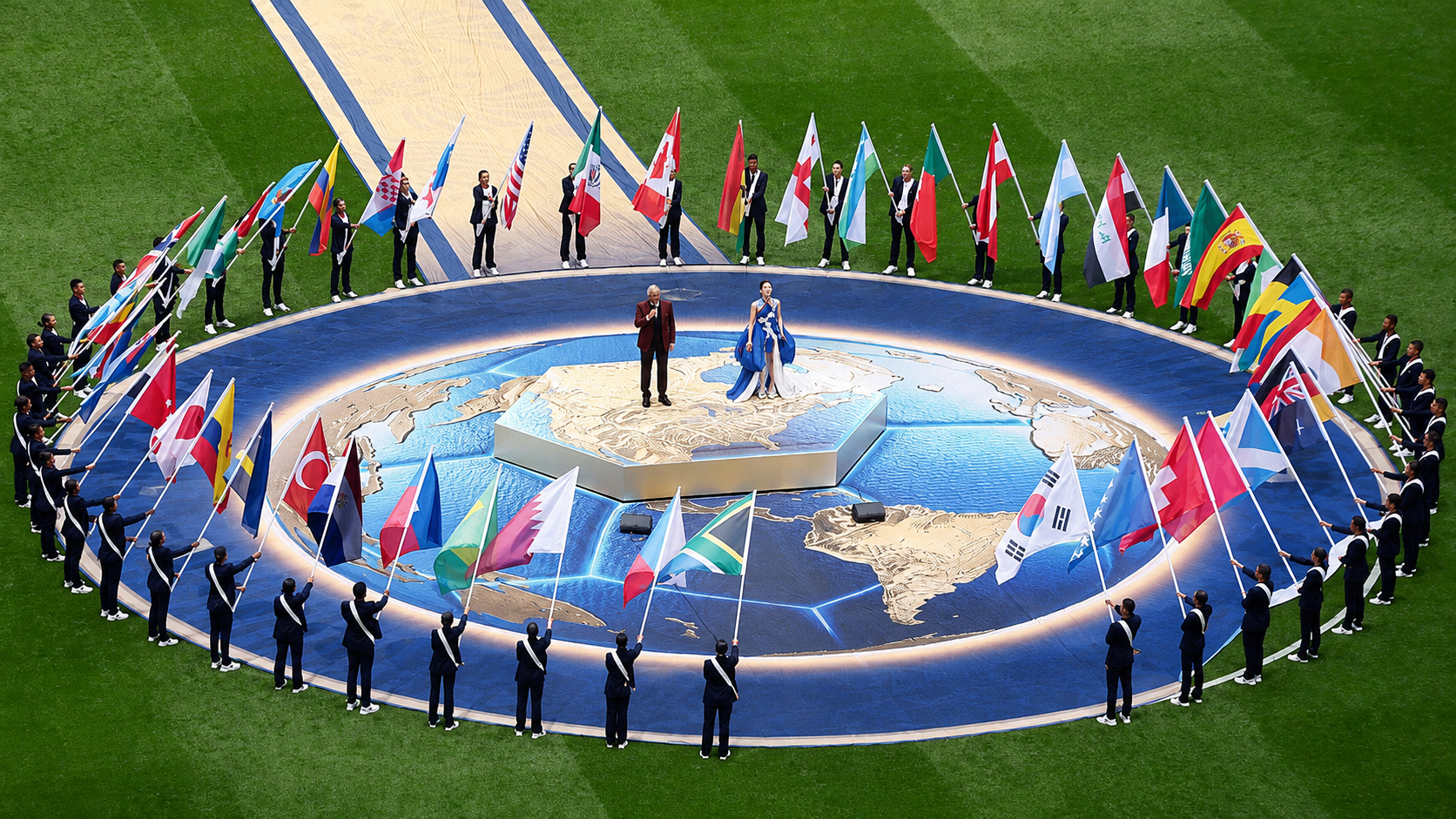
The entertainment mattered, but so did the formal rituals that make a World Cup opening ceremony feel historic. Salma Hayek Pinault welcomed the 48 competing nations, a moment that carried extra significance because this was the first World Cup in tournament history to feature 48 teams.
The flag procession reinforced the scale of the competition. It visually introduced the breadth of the field and reminded viewers that this edition is larger, more diverse and more geographically expansive than any before it.
National anthem performances then shifted the mood from festival to competition. When red and green smoke rose to signal the official beginning of the tournament, the ceremony completed its transition from spectacle to sport.
That sequence mattered because it gave structure to the event. It was not just a concert before a match. It was the formal opening of a new chapter in World Cup history.
Why the 2026 FIFA World Cup Opening Ceremony Meant More Than Entertainment
The 2026 World Cup opening ceremony mattered for three reasons.
1. It marked the beginning of a new tournament format
This was the launch of the first 48-team FIFA World Cup, a major shift in the competition’s modern history. Everything about the night had to signal scale, inclusion and change.
2. It put Mexico at the emotional center of the opening
Although the tournament is shared across Mexico, Canada and the United States, the choice of Estadio Azteca gave opening night a distinctly football-first identity. It honored a venue that already belongs to World Cup legend.
3. It showed how football and music shape each other
From Shakira’s callback to 2010 to Burna Boy’s global presence and the Mexican cultural performances throughout the show, the ceremony captured something fans intuitively understand: the World Cup is never only about the matches. It is also about memory, sound, symbolism and national identity.
What Fans Will Remember From Mexico City
Some opening ceremonies are remembered for a single song or a single visual. Mexico City’s version may be remembered for its overall balance. It respected football tradition without feeling dated. It embraced celebrity without losing cultural substance. And it gave Mexico’s identity real space inside a global event.
For fans following the tournament from a football angle, the ceremony set the emotional backdrop for Mexico vs South Africa. For those watching as entertainment viewers, it delivered recognizable stars and major production value. For everyone else, it served as a reminder that the World Cup remains one of the few events that can merge sport, culture and spectacle at this scale.
Final Take on the Shakira and Burna Boy World Cup 2026 Opening Ceremony
The World Cup 2026 opening ceremony at Estadio Azteca set the tone exactly as FIFA and the host nation would have hoped. By combining football history, Mexican identity and global music on one of the sport’s most iconic stages, it gave the tournament a memorable beginning before the first ball was kicked between Mexico and South Africa.
Shakira and Burna Boy may have topped the billing, but the real success of the night was broader than any single performance. Mexico City delivered an opening that felt worthy of the World Cup itself: festive, symbolic, emotional and unmistakably global.