World Cup 2026 ticket scams Australia fans need to watch for will likely increase as demand grows for tickets, flights, hotels and official merchandise across North America. That demand creates opportunity for scammers, especially when supporters feel pressure to book quickly before prices rise or availability disappears. The good news is that most World Cup 2026 ticket scams follow familiar patterns, which means you can lower your risk by sticking to official channels, securing your accounts and slowing down before you pay.
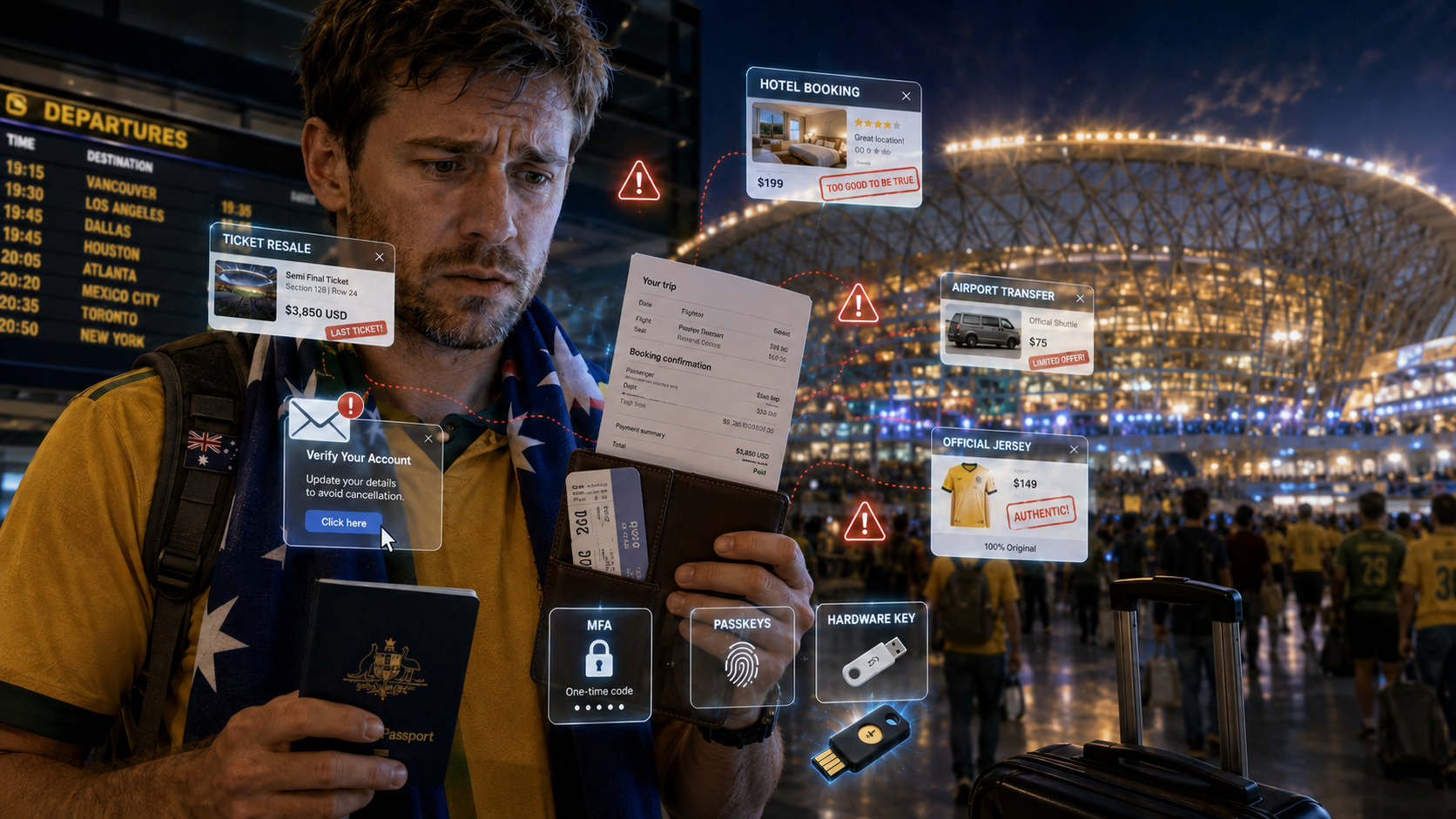
World Cup 2026 Ticket Scams Australia Fans Should Watch For
Major sporting events always attract fraud, but World Cup 2026 ticket scams Australia fans should watch for are a bigger risk because demand is global, supply is limited and emotions run high. Australian supporters travelling to the USA, Canada and Mexico may be organising tickets, accommodation and transport across multiple cities, often months in advance. That complexity gives scammers more ways to step in with fake offers.
Searches for World Cup 2026 tickets Australia, FIFA resale tickets and World Cup travel packages will likely bring up a mix of legitimate information and risky listings. If a deal appears on social media, in a Facebook group, on WhatsApp or via a direct message from a stranger, treat it with caution.
The most common World Cup 2026 scams to watch for
Fake resale ticket listings
One of the biggest World Cup 2026 ticket scams Australia supporters should watch for is the fake resale listing. A seller may claim they can no longer attend a match and offer mobile tickets, QR codes or PDF tickets at a discount. In some cases, the ticket never existed. In others, the same ticket is sold to multiple buyers, leaving everyone except the first scanned person locked out at the gate.
Common warning signs include:
- Prices far below expected market value
- Pressure to pay immediately by bank transfer or crypto
- Claims that the ticket must be sent as a screenshot only
- Refusal to use official resale or exchange systems
- New or anonymous seller profiles with little history
For Australian fans, the safest move is to buy through FIFA’s official ticketing website or any authorised resale and exchange platform that FIFA confirms. Buying through random third-party sellers increases the chance of receiving invalid, duplicated or fake tickets.
Phishing emails and fake ticket updates
Phishing is another major threat around global tournaments. Scammers send emails or texts that appear to come from FIFA, a ticketing provider, an airline or a hotel platform. The message may say your payment failed, your ticket is about to be cancelled, your account needs verification or you have a limited-time chance to upgrade seats.
These messages work because they create urgency. Once you click, you may land on a fake login page designed to steal your password, card details or one-time code.
What makes this more dangerous now is that AI-generated scam content can look polished and convincing. Criminals can copy official branding, tone and layout so closely that fake emails and websites appear genuine at a glance.
Fake ticket offers on social media and messaging apps
Scammers increasingly operate through Instagram, Facebook Marketplace, Telegram, WhatsApp and similar platforms. They often use phrases like “last spare ticket”, “friend can’t travel” or “selling cheap before midnight”. A profile may even show football content to look trustworthy.
Be especially careful with:
- QR codes sent as images
- PDF tickets shared over chat
- Screenshots offered as proof of ownership
- Requests to continue the sale off-platform
Digital ticket formats can be copied, forwarded or reused. A screenshot is not reliable proof that a ticket is valid or that the sender controls the account it came from.
Fake accommodation deals
Accommodation scams rise sharply around major tournaments. A scammer may copy a real property listing, use stolen photos and offer a discount for direct payment outside the booking platform. Others create entirely fake short-stay websites offering hotels, apartments or host accommodation near stadiums.
Red flags include:
- A deal that is much cheaper than similar listings in the same area
- A request for payment by transfer instead of through a known platform
- Pressure to “secure tonight” because demand is high
- Poorly written booking confirmations or missing address details
- Hosts who refuse video calls or extra verification
If you are travelling between World Cup host cities, use established accommodation providers and verify bookings directly through the platform or hotel website.
Fake transport packages and travel bundles
Some scams bundle match tickets with flights, airport transfers or intercity transport. These offers can look attractive to Australians planning a long-haul trip, especially when they promise convenience across North America. But unofficial travel packages may contain fake reservations, cancelled bookings or tickets that were never authorised for resale.
Before paying for any package, confirm:


- Who is issuing the tickets
- Whether the seller is an authorised travel or hospitality provider
- Whether hotel and transport bookings can be independently verified
- What refund and dispute options apply if something goes wrong
Fake merchandise stores
Counterfeit jerseys, scarves and souvenirs are common before every World Cup. Some fake stores are obvious, but others look polished and may advertise heavily through social media. The risk is not only poor-quality goods. Some sites are built to steal card details or personal information.
If you want official World Cup merchandise, buy from FIFA-approved outlets, major authorised retailers or trusted club and sportswear partners. If a store appears only through an ad and offers massive discounts on “official” gear, be cautious.
Why official ticketing channels matter
When fans search for how to buy World Cup 2026 tickets safely, the answer is simple: use official channels first. FIFA’s official ticketing website should be your primary source for ticket sales, updates and any authorised resale or exchange options.
This matters because official channels usually provide:
- Verified ticket issuance
- Rules on transfer or resale eligibility
- Support if there is an account or payment issue
- Reduced risk of duplication and fraud
By contrast, unofficial sellers on social platforms or random marketplaces may disappear after payment. Even if they send a file that looks real, you may not discover the problem until match day.
Be careful with PDF tickets, QR codes and screenshots
Many fans assume a ticket is safe if a seller can show a QR code or send a PDF. That is not enough. Digital tickets can be copied in seconds, and the same code may be sent to multiple people.
Keep these points in mind:
- A screenshot does not prove ownership
- A PDF can be duplicated and resold repeatedly
- A QR code may scan only once, leaving later buyers locked out
- Messaging apps make it easy for scammers to circulate copied ticket files
If a seller insists that a screenshot or PDF sent by chat is all you need, walk away unless the transfer is happening inside an official ticketing system.
Account takeover is now a major threat
Cybercriminals are no longer focused only on hacking large systems. Increasingly, they target individual accounts because it is often easier to trick one fan than break into a secure platform. If a scammer gets into your ticketing email, FIFA-related account or payment account, they may change details, steal tickets or lock you out.
This is why account security matters just as much as safe buying habits.
How to protect your ticketing and travel accounts
Use strong, unique passwords for your email, ticketing account and any travel services linked to your World Cup plans. Reusing one password across multiple services increases the damage if one account is exposed.
Also turn on multi-factor authentication wherever available. Stronger options include:
- Passkeys, which reduce reliance on passwords
- Hardware security keys, which offer phishing-resistant protection
- Authenticator app codes, which are better than no extra security
- SMS codes, which still help but can be more vulnerable to phishing or interception than stronger methods
You do not need to become highly technical. The key point is simple: phishing-resistant methods such as passkeys or hardware keys are generally stronger than codes that can be typed into a fake website.
How urgency tactics trick fans into mistakes
Scam messages often try to make you panic before you think. The language may sound official, but the goal is to rush you into clicking, logging in or paying.
Typical claims include:
- Your payment has failed
- Your ticket will be cancelled today
- Your account is suspended
- You must verify your identity now
- This resale offer expires in 10 minutes
- Only one room remains near the stadium
If you receive an unexpected email, text or direct message, do not click the link inside it. Instead, go directly to the official website or app and check your account there. That one habit can stop a large share of phishing attempts.
Practical safety checklist for Australian fans travelling to the World Cup
- Buy tickets only through FIFA’s official ticketing website or authorised resale and exchange channels
- Avoid social media sellers, messaging app deals and unknown third-party offers
- Do not rely on screenshots, PDFs or QR codes shared casually in chat
- Use a strong, unique password for every key account
- Enable multi-factor authentication, ideally with passkeys or a hardware security key where supported
- Do not click links in unexpected ticket, airline, hotel or merchandise messages
- Book accommodation and transport through established, verifiable providers
- Pay with a method that offers dispute protection where possible
- Check website addresses carefully before logging in or paying
- Buy merchandise only from official or authorised retailers
What to do if you think you have been scammed
If you have already paid a suspicious seller or entered details into a fake website, act quickly. Change your password immediately, secure your email account, enable stronger authentication and contact your bank or card provider. If tickets are involved, check your official account directly to see whether any transfers or changes have been made.
It can also help to document messages, payment records and web addresses. Fast action improves your chances of limiting financial loss or account misuse.
Final Word on World Cup 2026 Ticket Scams Australia Fans Should Know
Scams around the 2026 FIFA World Cup will keep evolving, and AI-generated messages will make many of them look more convincing than older fraud attempts. But Australian fans can still reduce their risk by following a few practical rules: use official channels, secure your accounts, avoid rushed decisions and double-check unexpected messages before acting. With the right habits, you can focus less on fraud and more on planning the trip and enjoying the tournament.