FIFA has confirmed a major World Cup 2026 prize money increase, and the message is clear: the expanded 48-team tournament will also come with a bigger financial package for every nation involved. Beyond the headline figures, the latest FIFA Council updates also reveal broader governance, competition, and calendar changes that could shape the next cycle of international football.
For fans, bettors, and football industry watchers, this matters because money often signals priority. Higher preparation funds, improved qualification compensation, and wider support for team delegations show how seriously FIFA is scaling up the 2026 World Cup across sporting and commercial lines.
- All 48 teams at World Cup 2026 will receive increased FIFA payments
- Preparation funding rises from US$1.5 million to US$2.5 million
- Qualification compensation increases from US$9 million to US$10 million
- Additional support will cover delegation costs and ticket allocations
- Remaining FIFA income will be shared across all 211 member associations
- FIFA also confirmed a yellow card reset rule for World Cup 2026
- Governance updates include women’s, youth, refugee, and calendar decisions
Why the World Cup 2026 Prize Money Increase Matters
Search interest around world-cup-2026-prize-money-increase is not just about headline numbers. Fans want to know what the increase says about FIFA’s finances, whether smaller nations benefit, and how the new 48-team format changes the tournament’s economic model.
The answer is simple: World Cup 2026 is becoming an even bigger global business. With more teams, more matches, and broader commercial reach across the United States, Canada, and Mexico, FIFA is using its financial strength to distribute more money while reinforcing the event’s global scale.
FIFA Is Increasing Payments for All 48 Teams
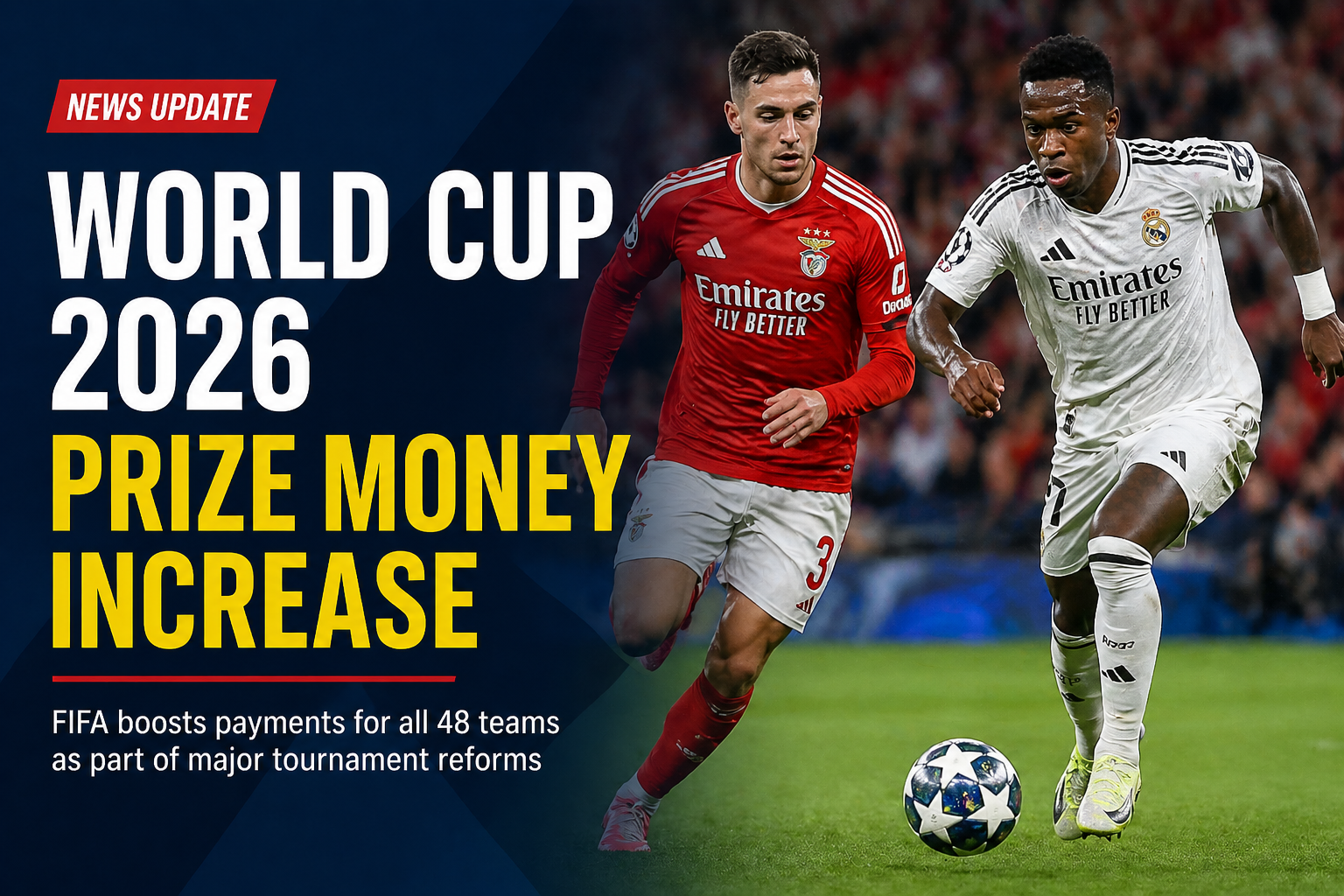
One of the biggest takeaways from the FIFA Council decisions is that every team reaching World Cup 2026 will benefit from larger payments. This is important because the increase is not limited to the finalists or semi-finalists. FIFA is strengthening the financial base for all qualified nations.
That broader distribution supports competitive balance. For major football powers, the extra money is useful but not transformative. For emerging football nations, however, the increase can significantly improve logistics, staffing, training camps, recovery resources, and preparation quality before the tournament begins.
Preparation Funding Rises to US$2.5 Million
Preparation funding will increase from US$1.5 million to US$2.5 million per team. That is a substantial jump and one of the clearest indicators that FIFA expects World Cup 2026 operations to be more demanding.
Teams now need to plan for longer travel distances, complex host-country coordination, expanded backroom needs, and a bigger tournament environment. An extra US$1 million in preparation funding helps federations manage those costs with less financial strain.
In practical terms, this can support:
- Pre-tournament training camps
- Sports science and medical staff expansion
- Improved accommodation and travel planning
- Enhanced security and administrative operations
- Better player recovery and performance infrastructure
Qualification Compensation Increases from US$9 Million to US$10 Million
FIFA has also raised qualification compensation from US$9 million to US$10 million. While the percentage increase is smaller than the preparation-fund jump, it still reinforces the value of reaching the tournament.
For national associations, this added US$1 million can have a meaningful impact beyond the World Cup itself. It can help support domestic development, youth pathways, coaching systems, and federation stability after qualification has been achieved.
That is especially relevant in countries where World Cup qualification can reshape the financial outlook of the entire football structure for several years.
Extra Support for Delegation Costs and Ticket Allocations
FIFA’s package is not just about direct payments. It also includes extra support for delegation costs and ticket allocations. This matters because tournament participation expenses often go far beyond the official squad setup.
Delegation-related costs can include support staff travel, accommodation management, internal transportation, operations teams, and other essential personnel needed to run a modern national team environment.
Meanwhile, ticket allocation support is also significant. It helps federations better serve players’ families, officials, sponsors, and supporter groups while managing one of the most in-demand sporting events in the world.
FIFA’s Financial Strength and Revenue Sharing Across 211 Member Associations
FIFA President Gianni Infantino said the increased funding underlines FIFA’s financial strength and its commitment to reinvesting revenues back into the game. That line is central to how FIFA wants these decisions to be understood.
Rather than presenting World Cup 2026 purely as a commercial success, FIFA is framing the tournament as a revenue engine that benefits the full global football ecosystem.
Most notably, remaining FIFA income will be shared across all 211 member associations. That is a major governance point because it extends the impact of World Cup revenues beyond the 48 qualified teams.
This wider distribution supports FIFA’s recurring argument that major tournaments should fund global football growth, not just elite competition. Whether critics fully accept that framing is another question, but the redistribution model is a core part of FIFA’s current strategy.
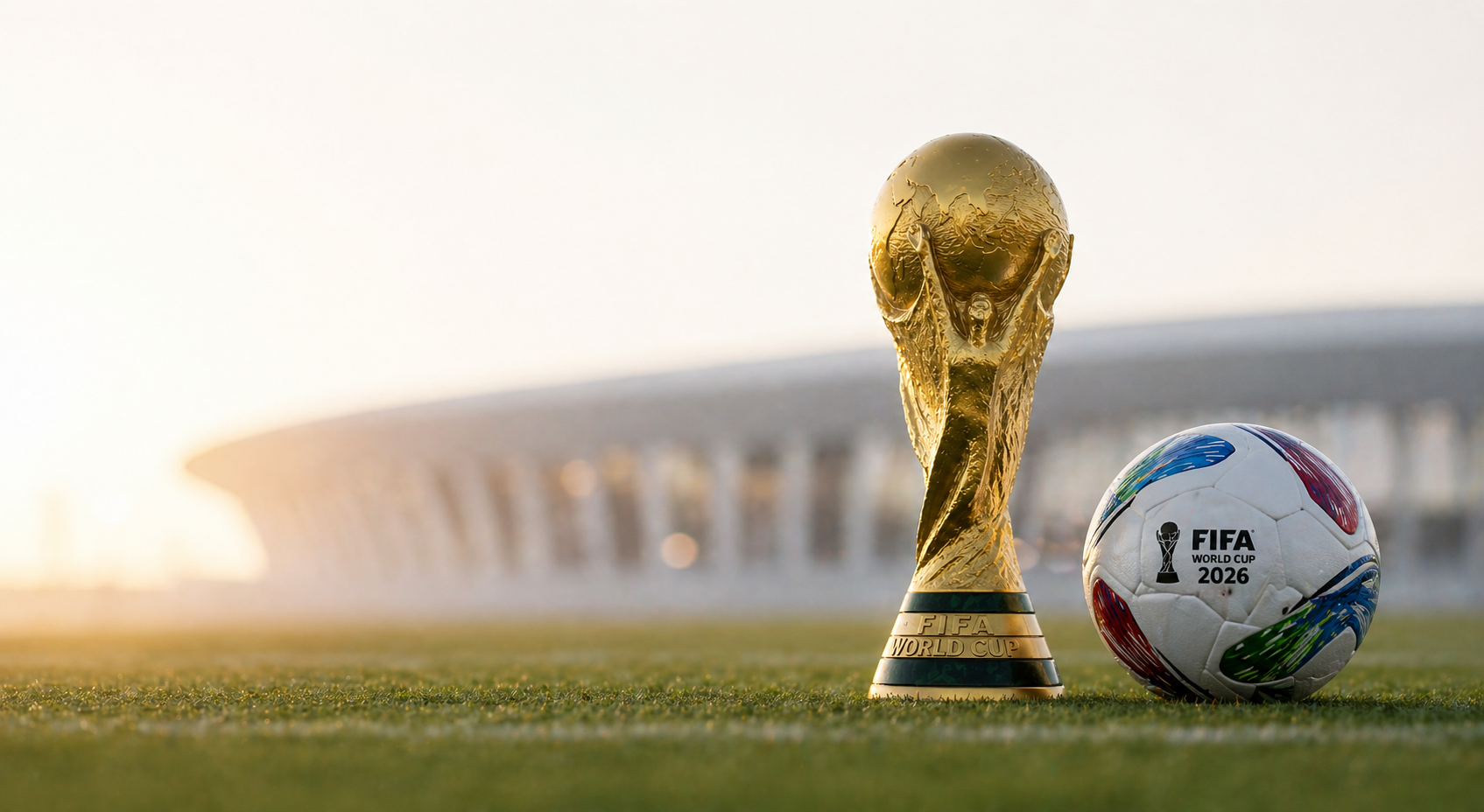
What the Bigger Payments Say About the Scale of World Cup 2026
The World Cup 2026 prize money increase is really a story about scale. This will be the first men’s World Cup with 48 teams, and that expansion naturally changes the economics of the event.
More teams mean:
- More qualification storylines and global engagement
- More matches and media inventory
- More sponsorship opportunities
- More ticket demand across host cities
- More tourism and commercial activation
When FIFA raises payments across the board, it is acknowledging that the tournament’s commercial footprint has grown. It also helps maintain political support from member associations, many of whom will view the 2026 World Cup as proof that expansion brings direct financial value.


For readers who follow football economics or even World Cup betting markets, this matters because well-funded teams are generally better equipped to prepare efficiently. Better preparation can influence squad readiness, tactical execution, and even outsider performance in group-stage betting or futures markets.
Yellow Card Reset Rule Confirmed for World Cup 2026
Alongside the financial announcements, FIFA also confirmed the yellow card reset rule for World Cup 2026. This is one of the most practical sporting changes for fans and bettors tracking suspensions during the tournament.
The rule is designed to reduce the risk of players carrying accumulated bookings too deep into the knockout rounds. In simple terms, yellow cards will reset at a designated stage so players are less likely to miss the latter rounds because of earlier caution accumulation.
That helps protect marquee matchups and reduces distortion in key knockout fixtures. It also gives coaches more flexibility in managing players who enter later-stage games on caution risk.
From a betting perspective, suspension rules can influence lineup certainty, player-card markets, and match predictions. So this is not a minor administrative detail; it has real tournament implications.
Afghan Women’s Refugee Team Cleared for Official FIFA Competitions
One of the most notable governance decisions was FIFA clearing the Afghan Women’s Refugee Team to compete in official FIFA competitions. This is a significant step, both symbolically and structurally.
It reflects FIFA’s attempt to respond to a complex humanitarian and sporting issue while providing a competitive pathway for displaced players. The move is likely to draw attention well beyond football because it touches on representation, inclusion, and the governing body’s role in exceptional circumstances.
For FIFA, it is also a statement that governance decisions announced alongside financial updates are not limited to tournament administration. They increasingly carry political, social, and institutional weight.
Other Major FIFA Decisions Announced Alongside the Funding Boost
The World Cup 2026 payment increase arrived as part of a wider set of FIFA Council decisions. Taken together, these updates show how much of the international football calendar is being shaped well in advance.
Armenia and Georgia to Host the FIFA U-20 World Cup 2029
FIFA named Armenia and Georgia as hosts of the FIFA U-20 World Cup 2029. That decision gives the region a major youth football event and continues FIFA’s push to spread hosting rights across a broader range of member associations.
Youth tournaments often matter more than they first appear. They test infrastructure, create development opportunities, and raise the profile of emerging football markets.
Miami to Host the Final Stage of the 2027 FIFA Women’s Champions Cup
Miami will host the final stage of the 2027 FIFA Women’s Champions Cup. This is another commercially strategic choice, given the city’s global visibility, football growth, and event-hosting strength.
It also fits FIFA’s wider effort to increase the profile and commercial value of women’s club football on the international stage.
Qatar to Stage the FIFA U-17 World Cup 2026
Qatar has been confirmed as host for the FIFA U-17 World Cup 2026. That continues the country’s active role in major FIFA competitions following the senior men’s World Cup and other international events.
From FIFA’s perspective, it is a practical hosting solution with proven infrastructure. From a broader football perspective, it shows how established tournament hosts continue to play a large role in FIFA event planning.
Updates to the Men’s International Match Calendar
FIFA also approved updates to the men’s international match calendar. These changes matter for clubs, national teams, players, and bettors alike because calendar structure affects availability, rest periods, travel burdens, and preparation windows.
Even small calendar adjustments can shape squad rotation, injury risk, and the quality of international fixtures across qualification and tournament cycles.
FIFA Presidential Election Timeline for 2027–2031
Another key governance point was the timeline for the FIFA presidential election covering the 2027–2031 term. This may sound procedural, but leadership timelines influence policy continuity, political alliances, and the future direction of FIFA reforms.
Whenever major financial redistribution and governance decisions are announced together, it is worth noting the broader institutional context. Money, rules, event hosting, and political timing are rarely separate stories inside world football.
What This Means for Fans, Federations, and the Football Business
The bigger World Cup 2026 payments send a strong signal to all parts of the game.
- For federations: qualification now carries even more financial value
- For players and coaches: better-funded preparation can improve tournament performance
- For fans: the expanded event looks more commercially powerful than ever
- For analysts and bettors: funding, rules, and calendar decisions can all affect team readiness and tournament dynamics
This is why the world-cup-2026-prize-money-increase story matters beyond the raw dollar figures. It is really about how FIFA is building a larger, richer, and more politically connected World Cup ecosystem.
Final Take on the World Cup 2026 Prize Money Increase
FIFA’s decision to increase payments for all 48 teams at World Cup 2026 is more than a financial adjustment. It is a statement about the tournament’s new size, new revenue potential, and new place at the center of the global football economy.
The rise in preparation funding from US$1.5 million to US$2.5 million, the increase in qualification compensation from US$9 million to US$10 million, and the added support for delegation and ticket costs all point in the same direction: FIFA wants the expanded World Cup to feel bigger at every level.
At the same time, the associated announcements on yellow card resets, refugee team eligibility, youth tournament hosts, women’s competition planning, the international match calendar, and the presidential election timeline show that FIFA is using this moment to reshape more than just one event.
World Cup 2026 is getting richer, broader, and more influential. These latest decisions make that impossible to miss.