World Cup 2026 controversies are already forming around what is being sold as the biggest and most inclusive tournament the sport has ever seen. The 2026 FIFA World Cup will feature more teams, more matches and a wider geographic footprint than any previous edition. But it is also likely to face more scrutiny than most World Cups, because this is not just a football event. It is a global mega-event spread across the United States, Mexico and Canada, making it the first men’s World Cup ever hosted by three countries.
That scale creates obvious excitement, but it also brings major questions. Fans, media and policymakers are already discussing ticket prices, travel costs, immigration rules, security planning, political tensions, heat risks and environmental impact. The result is a tournament that could be historic on the pitch while remaining deeply complicated off it.

Why the 2026 World Cup is historic
There is no question that World Cup 2026 will mark a turning point in FIFA history. The tournament expands from 32 teams to 48, a change that dramatically increases the event’s scale and commercial reach. More nations will get a place on the biggest stage, which supports FIFA’s argument that the World Cup is becoming more representative and more global.
The event will also be played across 16 host cities in three countries. That pan-continental model is unprecedented for a men’s World Cup and turns the competition into a massive logistical project as much as a sporting spectacle. More venues mean more local organizing demands, more transportation planning and more pressure on authorities to coordinate across borders.
There is also strong symbolic value in the schedule. Mexico City and the Estadio Azteca are expected to hold another World Cup opener, giving one of football’s most iconic stadiums yet another place in tournament history. That adds a layer of tradition to an event otherwise defined by expansion and modern scale.
From FIFA’s perspective, the appeal is obvious:
- 48 national teams instead of 32
- 104 matches under the expanded format
- 16 host cities across North America
- Three host nations sharing infrastructure and spotlight
- A broader global audience and larger commercial inventory
All of that should make the tournament feel enormous. It also helps explain why debate about whether the World Cup has become too big is growing louder.
World Cup 2026 Controversies: Can Ordinary Fans Still Afford It?
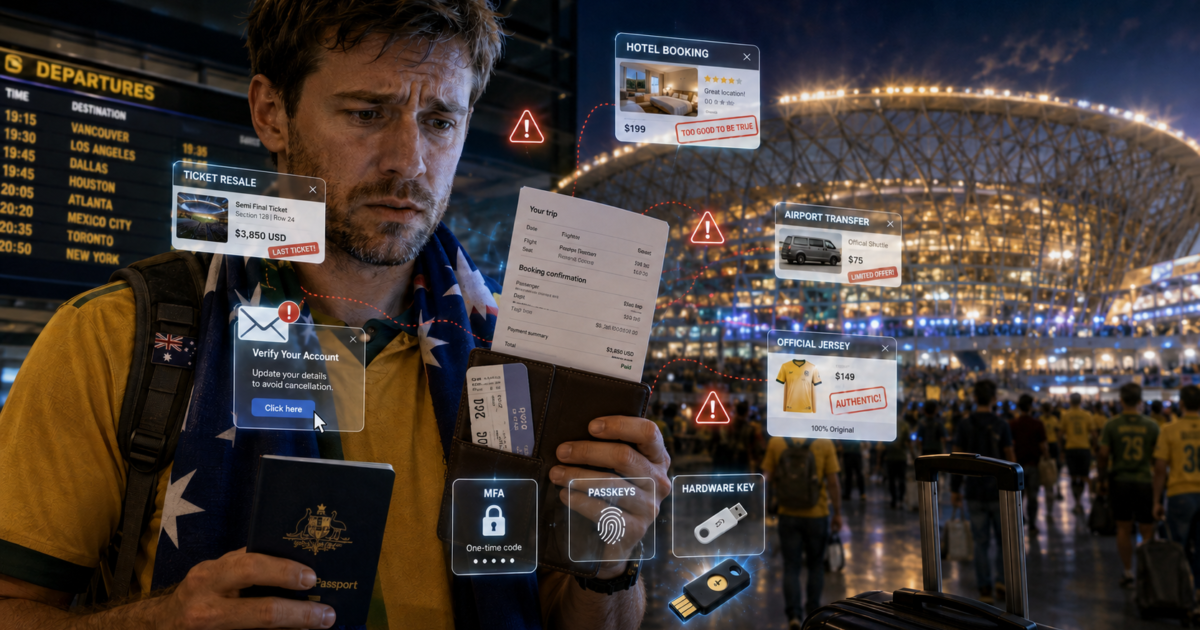
One of the biggest 2026 World Cup controversies is cost. Even before general ticketing is complete, many supporters expect a tournament that will be expensive to attend in almost every category. Tickets for premium matches are likely to be costly, but the bigger burden may come from everything around the ticket: flights, hotels, local transport, food, visa processing and insurance.
Unlike a compact tournament where fans can move by train or short domestic connections, the 2026 edition stretches across huge distances. A supporter could watch one match in the United States, then need to cross into Canada or Mexico days later. That may be manageable for wealthier travelers, but it risks pricing out many ordinary fans.
Main cost pressures include:
- High demand for flights between host cities
- Hotel prices rising around matchdays
- Cross-border travel costs between the US, Canada and Mexico
- Dynamic pricing and hospitality-driven ticket strategies
- Extra spending on visas, travel documentation and insurance
That matters because World Cups have traditionally depended on visible, passionate fan culture in and around stadiums. If attending becomes too expensive, the atmosphere may shift toward corporate hospitality, higher-income visitors and locally based spectators rather than broad international support.
A politically sensitive tournament in North America
The 2026 World Cup arrives during a politically sensitive period, especially in the United States. That does not automatically mean disruption, but it does mean the wider mood around the competition could be shaped by issues far beyond football.
Immigration policy is one of the clearest examples. Because the tournament is split across three countries, border movement will be central to the fan experience. Supporters, media staff, team officials and commercial partners may all need to move quickly between jurisdictions. Any tightening of entry rules, visa delays or inconsistent border procedures could become a major story during the event.
International relations could also affect the atmosphere. The World Cup usually presents itself as a celebration of openness and global unity, but political rhetoric around migration, trade, security and diplomacy can easily cut across that image. In that sense, the tournament may become a stage not just for football, but for wider debates about how North America presents itself to the world.
This does not mean the event is doomed to political conflict. It means politics will form part of the background noise, and perhaps at times the foreground, of World Cup 2026.
Security concerns in Mexico and the challenge of public confidence
Security will be one of the most closely watched operational issues across all host countries, but discussion often focuses particularly on Mexico. Concerns linked to cartel violence, localized crime and the potential for public protests have made safety planning a sensitive topic.
It is important to keep this in proportion. Mexico has major experience hosting global sporting events and managing large crowds. The issue is not that host cities are uniquely unsafe, but that a World Cup raises the stakes. Millions of visitors, constant media attention and packed transport corridors put extra pressure on local authorities.
For organizers, the challenge is broader than policing alone. Host cities must manage:
- Stadium security and fan entry systems
- Safe movement around transport hubs
- Crowd control in public viewing zones
- Protest management that respects civil rights while protecting public order
- Clear communication that builds confidence among traveling supporters
If any host city appears unprepared, the issue can quickly become global news. That is why security planning in Mexico, and across the wider tournament, will be judged not only by incident numbers but by how effectively authorities maintain public trust.


Extreme heat could become a defining issue
Another major concern is climate and weather. A summer World Cup across North America will inevitably expose teams and fans to very different environmental conditions, and some host cities could face serious heat during daytime kickoffs.
This is not a theoretical issue. Extreme temperatures can affect player performance, recovery, fan comfort and even transport operations around venues. Long walks to stadiums, queuing in the sun and crowded transit systems can all become health risks when heat intensifies.
FIFA already uses cooling breaks and matchday heat protocols, and those tools may become even more important in 2026. Organizers could face difficult scheduling choices if television demands push matches into time slots that are commercially attractive but physically harsh.
Potential heat-related challenges include:
- Higher dehydration risk for players and supporters
- More frequent water breaks during matches
- Pressure to move kickoff times away from peak afternoon heat
- Additional strain on stadium cooling, shade and medical services
- Questions over whether commercial scheduling is overriding welfare concerns
If the tournament experiences a heatwave, this could become one of the defining storylines of the entire competition.
Sustainability concerns around a three-country World Cup
FIFA can argue that using existing large stadiums reduces the need for major new construction, and that is a meaningful point in its favor. But sustainability criticism is unlikely to disappear, because the scale of travel involved is impossible to ignore.
A tournament spread across 16 host cities in three countries means teams, officials, broadcasters, sponsors and supporters may need to fly long distances repeatedly. That raises concerns about emissions and about whether a larger World Cup can realistically claim to be environmentally responsible.
The sustainability debate is especially sharp because football governing bodies increasingly speak in the language of climate responsibility. Critics will ask whether that message fits comfortably with an expanded tournament built around more matches, more flights and more commercial activity.
Key environmental concerns include:
- Long-haul and regional flight emissions
- Frequent inter-city movement for fans and media
- Higher energy use across stadiums and event infrastructure
- The contradiction between expansion and climate pledges
- The challenge of proving that carbon-offset strategies are meaningful
In other words, 2026 may be a showcase for football’s growth, but also a test of whether mega-events can expand without undermining their own sustainability claims.
Has FIFA made the World Cup too big?
Behind many of these debates sits a deeper question: is the modern World Cup now too large? FIFA’s business case is clear. A bigger tournament creates more matches, more broadcast inventory, more sponsorship slots, more hospitality opportunities and, ultimately, more revenue.
That commercial logic is one reason the 48-team format was pushed so strongly. More national teams mean more domestic audiences engaged for longer. More games mean more ad inventory and more premium rights packages. For broadcasters and sponsors, scale is attractive.
But the same expansion that increases revenue also creates pressure elsewhere. It stretches scheduling, increases travel demand, raises organizational complexity and may dilute competitive quality in parts of the tournament. For critics, the 2026 World Cup represents the moment when football’s biggest event began to look as much like a global entertainment product as a sporting championship.
The debate is not simply pro- or anti-expansion. It is about trade-offs:
- More inclusion versus more congestion
- More revenue versus higher logistical burden
- More host-city exposure versus greater environmental cost
- More matches for fans to watch versus a potentially less compact tournament experience
That is why the World Cup 2026 controversy is not centered on one single issue. It comes from the collision of football ambition with political, commercial and environmental reality.
Why the tournament will still attract huge excitement
For all the criticism, it would be a mistake to ignore the scale of anticipation. The 2026 World Cup should still deliver unforgettable scenes, packed stadiums and a level of visibility few sporting events can match. North America offers major arenas, strong broadcast infrastructure and massive commercial energy. The expanded field will also allow more countries to dream, qualify and bring larger audiences into the tournament.
That excitement is real, and it is part of why scrutiny will be so intense. The bigger the event, the higher the expectations. Supporters want the spectacle, but they also want access, affordability, safety and fairness. Those demands are not anti-football. They are part of what makes a World Cup successful.
Final verdict: a spectacle with a complicated legacy at stake
The 2026 FIFA World Cup could be one of the greatest spectacles the sport has produced. It is historic in format, historic in geography and likely to be historic in audience size. Yet it may also become one of the most controversial tournaments ever because the football will sit inside a much larger story about money, politics, climate, security and public trust.
If organizers manage cost, safety, weather risks, border movement and fan access well, the tournament could set a powerful new standard for global hosting. If they do not, the event may be remembered as a World Cup that grew faster than its ability to remain accessible, coherent and widely trusted.
That is the real tension around World Cup 2026. It has all the ingredients of a major football celebration, but its legacy will depend on far more than what happens on the pitch.